Why StreetPlants
As cities across Canada invest in sustainable transportation and vibrant public spaces, the demand for thoughtful, design-forward street furniture is growing. With each new bike lane and pedestrian corridor, the need for secure, attractive, and functional amenities—like bike parking, seating, and signage—increases.
Municipalities and BIAs are recognizing the value of street furniture not just as infrastructure, but as placemaking tools that support community engagement, economic vitality, and environmental goals.
Government grants and programs increasingly fund these initiatives as part of “Complete Streets” strategies, which prioritize safety, accessibility, and active transportation.
StreetPlants responds to this momentum with durable, customizable furniture that enhances urban landscapes— offering a refined aesthetic, modular adaptability, and long-term performance. Our pieces are designed to integrate seamlessly into the public realm, helping cities large and small create streetscapes that are useful, beautiful, and built to last.

As an avid cyclist and longtime city resident, he recognized the value of well-designed, durable, and adaptable public furniture. This insight became the foundation for StreetPlants—a design-forward urban furniture studio that blends aesthetic refinement with practical performance.
Today, Scott continues to lead the company’s design and fabrication process, using CNC technology and collaborative development to create customizable, climate-resilient street furniture that enhances the public realm. His passion for placemaking and material integrity has shaped hundreds of installations that make streetscapes more welcoming, functional, and beautiful.
Scott Eunson is the founder of StreetPlants and a multidisciplinary designer whose work bridges architecture, sculpture, and public space. His career began with commissioned installations for hotels, restaurants, and interior design projects around the world. As the scale of his work grew—sometimes producing over a thousand pieces per project—Scott transitioned into public art, winning juried commissions from the City of Toronto, the TTC, and Waterfront Toronto. www.scotteuson.com
It was while installing large-scale public artworks throughout the city that Scott began to focus on the everyday needs of urban environments.
How we work
At StreetPlants, great design is never off-the-shelf. Our process blends digital design tools with hands-on prototyping to create public furniture that is beautiful, functional, and built to last.
Digital-to-Physical Design:
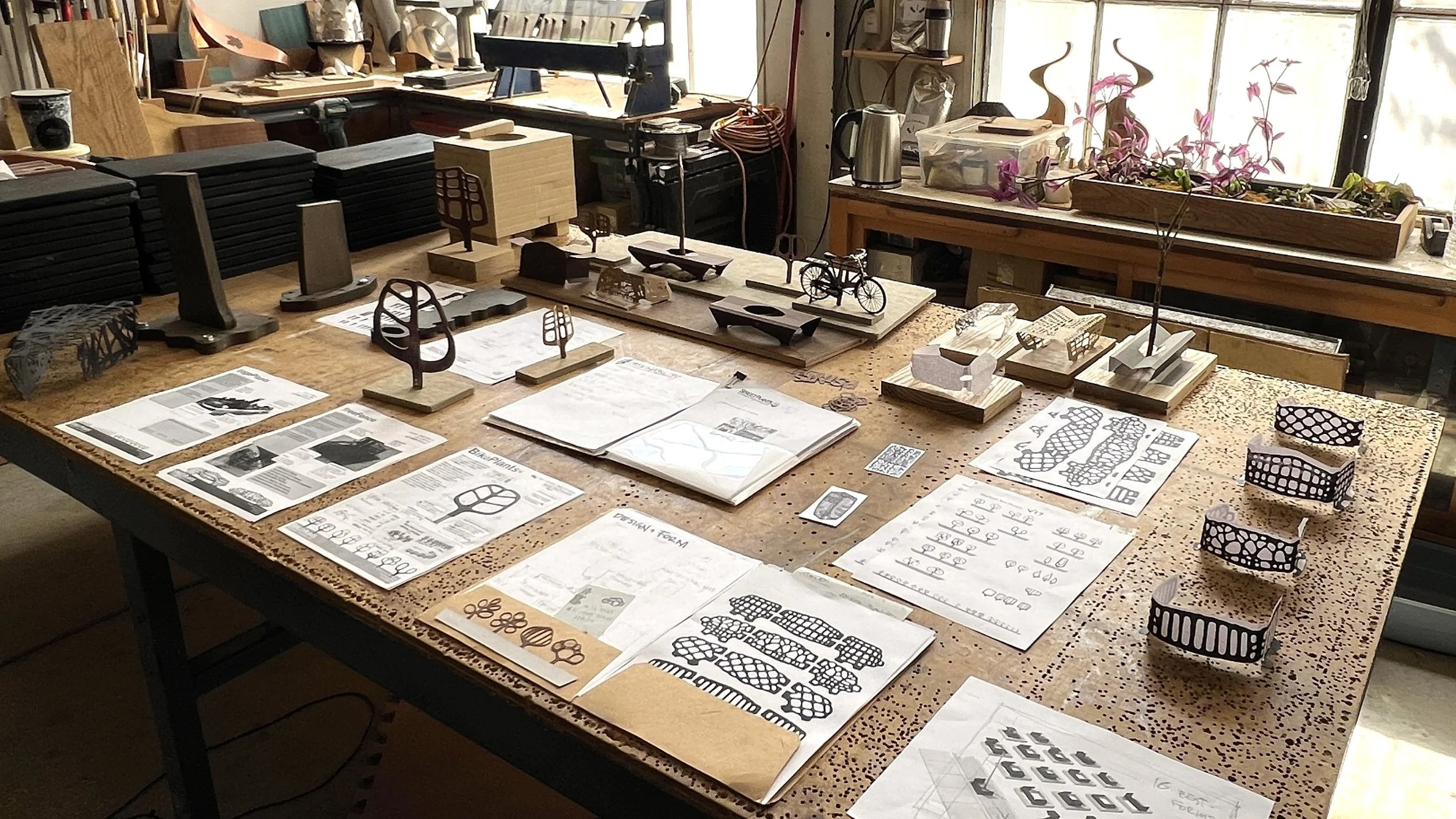
Our process begins with imagery—sometimes historical, sometimes from nature, and occasionally generated algorithmically. From these references, we develop custom patterns that give each StreetPlants design its unique visual language. These patterns are translated into vector silhouettes and modeled in 3D design software to generate refined forms that suit the context and function of the site.
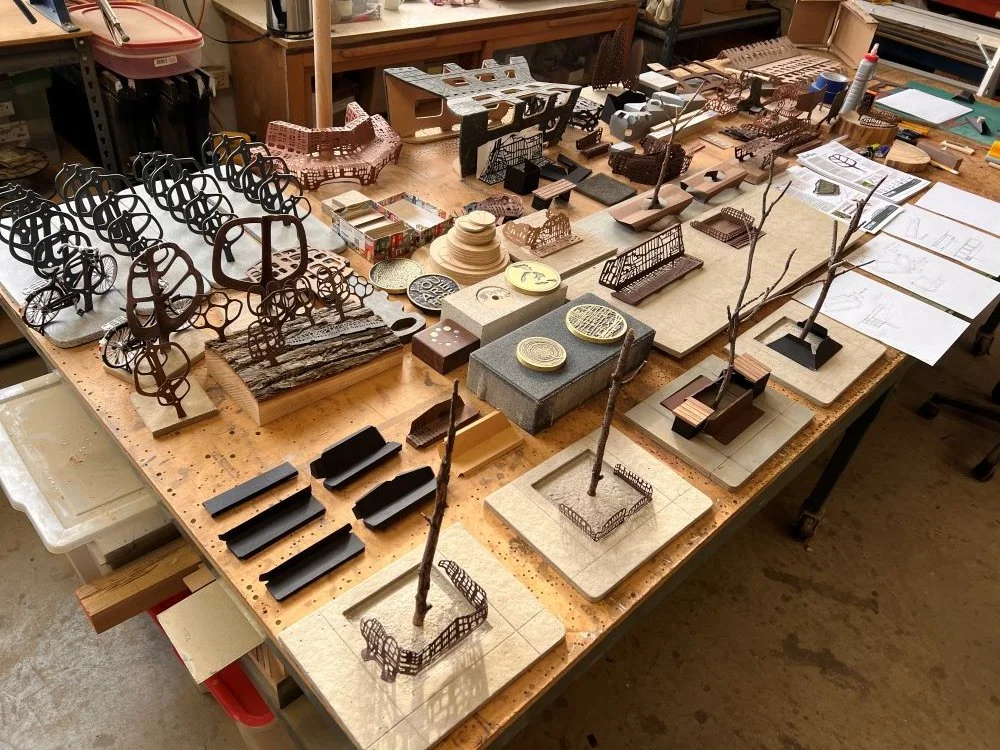
Once the design is digitally developed, the data is sent to our in-house CNC machines. This allows us to quickly fabricate everything from scaled paper models to full-size wooden mockups—rapidly moving from concept to physical form with precision and flexibility.
Iterative Prototyping:
Prototypes are essential to our design development. We begin with 1:10 paper models to refine form and pattern, and then move to full-scale mockups cut from wood using our CNC router. These life-size prototypes are critical for evaluating usability, material response, and the visual impact of each design in real space.
Refinement & Realization:
Through multiple iterations, material testing, and feedback, each design is carefully refined before final fabrication. This attention to detail ensures that every product we deliver is not only thoughtfully designed but also resilient, low-maintenance, and well-integrated into its environment.
On-Site Testing & Approval:
Full-scale prototypes can be temporarily installed on-site to assess placement, confirm dimensions, and ensure clarity of intent within the actual urban context. This step is especially valuable for stakeholder input and streamlining the approval process—helping everyone involved to visualize the final piece and ensure it meets the project's goals.